Elections for beginners
What are you actually voting for?
A municipal election chooses the people who make local government decisions. In Burlington, that means a mayor, one councillor for your ward and the school-board trustee race you are eligible to vote in.
Burlington City Council = 7 elected people
Mayor
Ward 1Ward 2Ward 3Ward 4Ward 5Ward 6
The mayor is elected by the whole city. Each councillor is elected by one ward.
First: what is an election?
It is a vote to choose who gets a public job. Municipal elections happen every four years in Ontario. The winners serve until the next regular municipal election.
Municipal just means local.
This election is about Burlington and the local school boards. It is different from a provincial election, where you choose an MPP, and a federal election, where you choose an MP.
The three choices on a Burlington ballot
Who does what1
Mayor
Everyone in Burlington votes in the same mayoral race. The mayor leads council, chairs council meetings, represents Burlington publicly and has additional provincial “strong mayor” powers, including proposing the City budget. The mayor is still one member of the seven-person council for ordinary council votes.
2
Your ward councillor
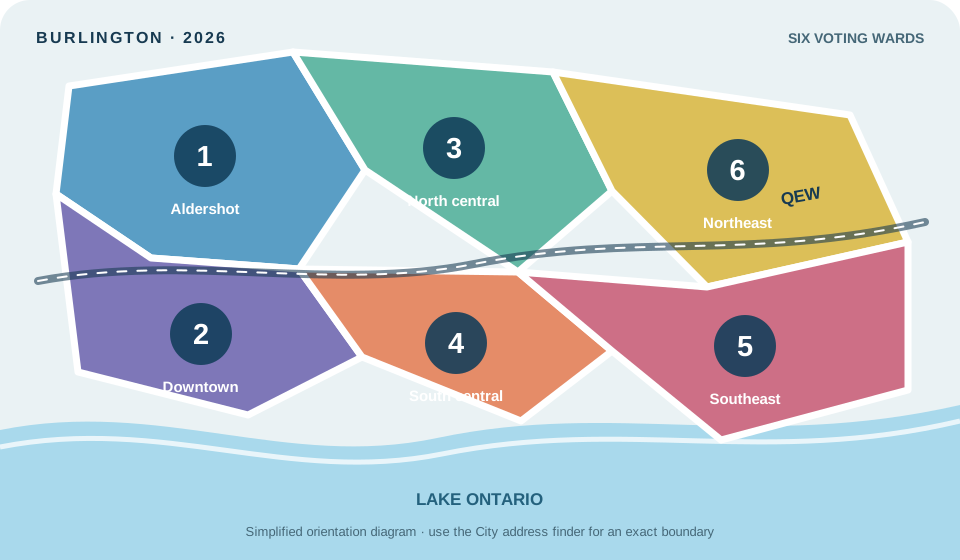
Burlington has six wards. You vote for one councillor in the ward where you live. That councillor represents local issues and also votes on citywide decisions such as budgets, roads, transit, parks and development.
3
School-board trustee
Trustees sit on a school board, not City Council. They bring community concerns to the board and make board decisions together. Which trustee race appears on your ballot depends on your school-board support and eligibility.
One important Burlington detail
Two levels at onceThe mayor and Burlington councillors also sit on Halton Regional Council.
That matters because some services you use are not run by the City of Burlington. Halton Region handles things such as drinking water, wastewater, waste management, paramedics, public health, housing services and regional roads. In 2026, the Halton Regional Chair is not a separate Burlington ballot choice under the province's new regional-governance rules.
Who controls the thing you care about?
Quick examplesCity of Burlington- Burlington Transit
- Local roads and traffic calming
- Parks and recreation
- Fire services
- Local planning and zoning decisions
- The City portion of the budget and property tax
Halton Region- Drinking water and wastewater
- Waste collection and management
- Paramedics and public health
- Regional roads
- Housing and social services
- Regional spending and taxes
Ontario / other governments- The province sets municipal powers and many planning rules
- The province sets major education rules
- Some roads and transit projects involve provincial agencies
- Not every promise made in a city campaign is fully under City control
Mayor vs. councillor: the easiest way to remember it
Citywide vs. wardMayor = the whole cityEvery eligible Burlington voter gets the same mayoral candidates.
123456
Councillor = your part of the city. Burlington changed some ward boundaries for 2026, so use the City's exact-address ward finder instead of guessing from your neighbourhood name.
How a campaign promise becomes a real city decision
It usually takes more than one person1. Someone proposes itA mayor, councillor, staff member or public process puts an idea on the table.
2. The details get worked outStaff may study cost, law, timing, traffic, planning or service impacts.
3. Council decidesFor normal council business, elected members debate and vote. A candidate cannot promise the votes of everyone else.
4. Money has to existA project may need budget approval, outside funding or a later capital plan.
5. Then it gets built or delivered“Approved” is not the same thing as “finished.” That is why this site separates proposed, approved, funded, started and completed.
Four questions to ask when a candidate promises something
Fast reality check1Is this actually a City power?
If another government controls it, what can Burlington realistically change?
2What would it cost?
If the promise saves money, what gets reduced? If it adds a service, how is it paid for?
3Who else has to agree?
Most council decisions need enough votes. Some projects also need Halton, provincial or other approvals.
4How would we know it happened?
A specific target, date or measurable result is easier to check than “improve traffic” or “make life affordable.”
Ready to compare the actual candidates?
Next step
Built from the City of Burlington's descriptions of Council and the 2026 election, Ontario's 2026 voters' guide, Halton Region's service list and Ontario's description of school-board trustees. See how sources are handled.