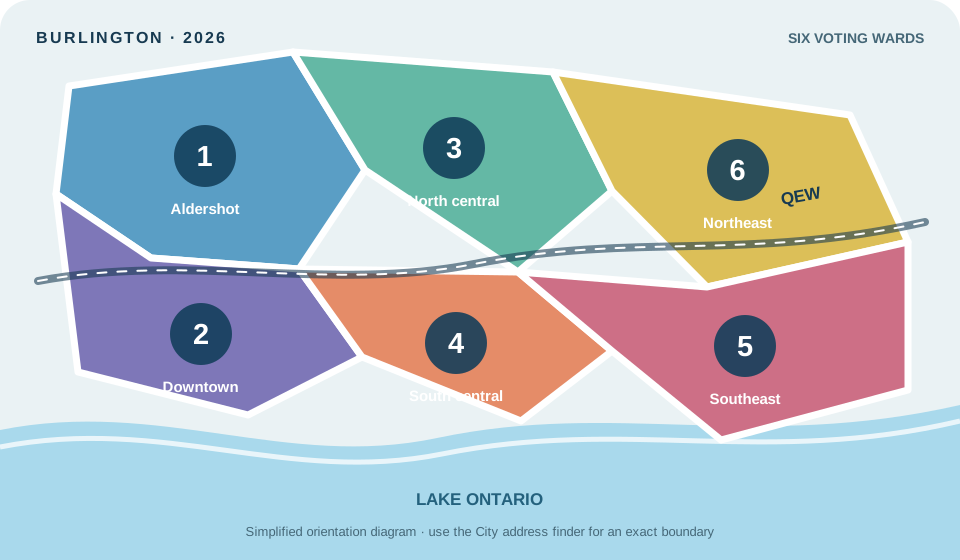
The easiest election mistake this year may happen before anyone reads a candidate's name.
Burlington is using new ward boundaries for the 2026 municipal election. That means some residents who have not moved will still find themselves voting in a different councillor race.
Why the boundary matters
Burlington still has six wards. What changed is where some of the lines run.
Your ward determines which councillor contest appears on your ballot. It can also affect the local candidate information and voting-location details that apply to you.
The mayoral race is city-wide, so every Burlington voter sees the same mayoral candidates. The ward race is the part that can change when a boundary moves.
A map is useful. Your address is better.
A simplified ward map can show the broad shape of the city, but boundaries can follow streets and property lines closely enough that two nearby homes may fall in different wards.
That is why Burlington News uses its ward graphic for orientation only. The City's address finder is the authoritative tool for a specific property.
When to check
Check before deciding which councillor debate, flyer or candidate page applies to you. Check again when voter information arrives if anything looks inconsistent.
If your ward changed, your house did not become part of a different neighbourhood overnight. What changed is the political boundary used to choose your local representative.