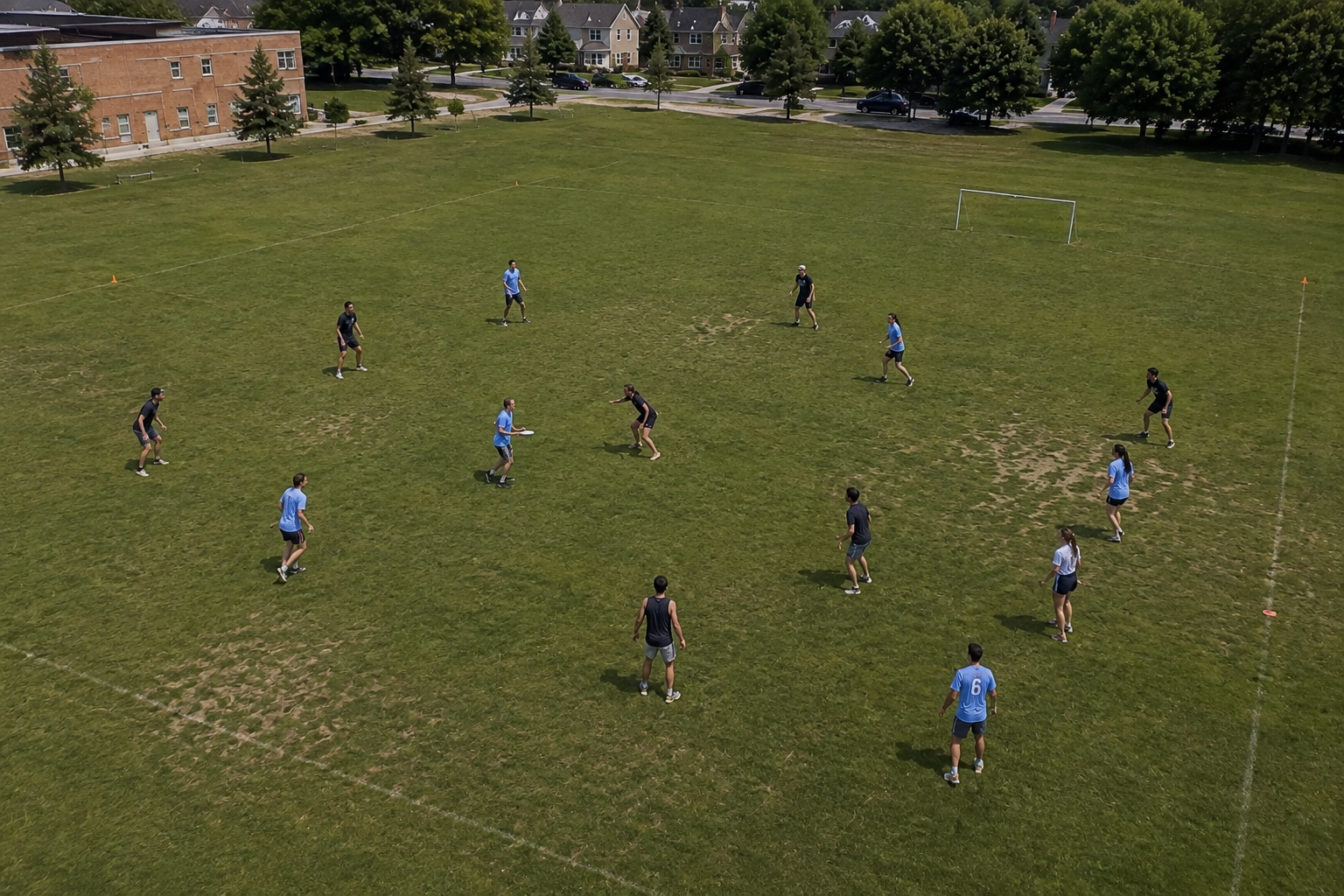
Last summer, a Burlington ultimate team called Panic at the Disco went 0–12. This summer, they changed their name to the Toss Bosses.
They went 0–12 again.
Twenty-four games across two regular seasons. Not one win.
First, what exactly is ultimate?
Ultimate, still commonly called Ultimate Frisbee, is played seven-on-seven on a field with an end zone at either end. A point is scored by catching the disc in the opposing team’s end zone.
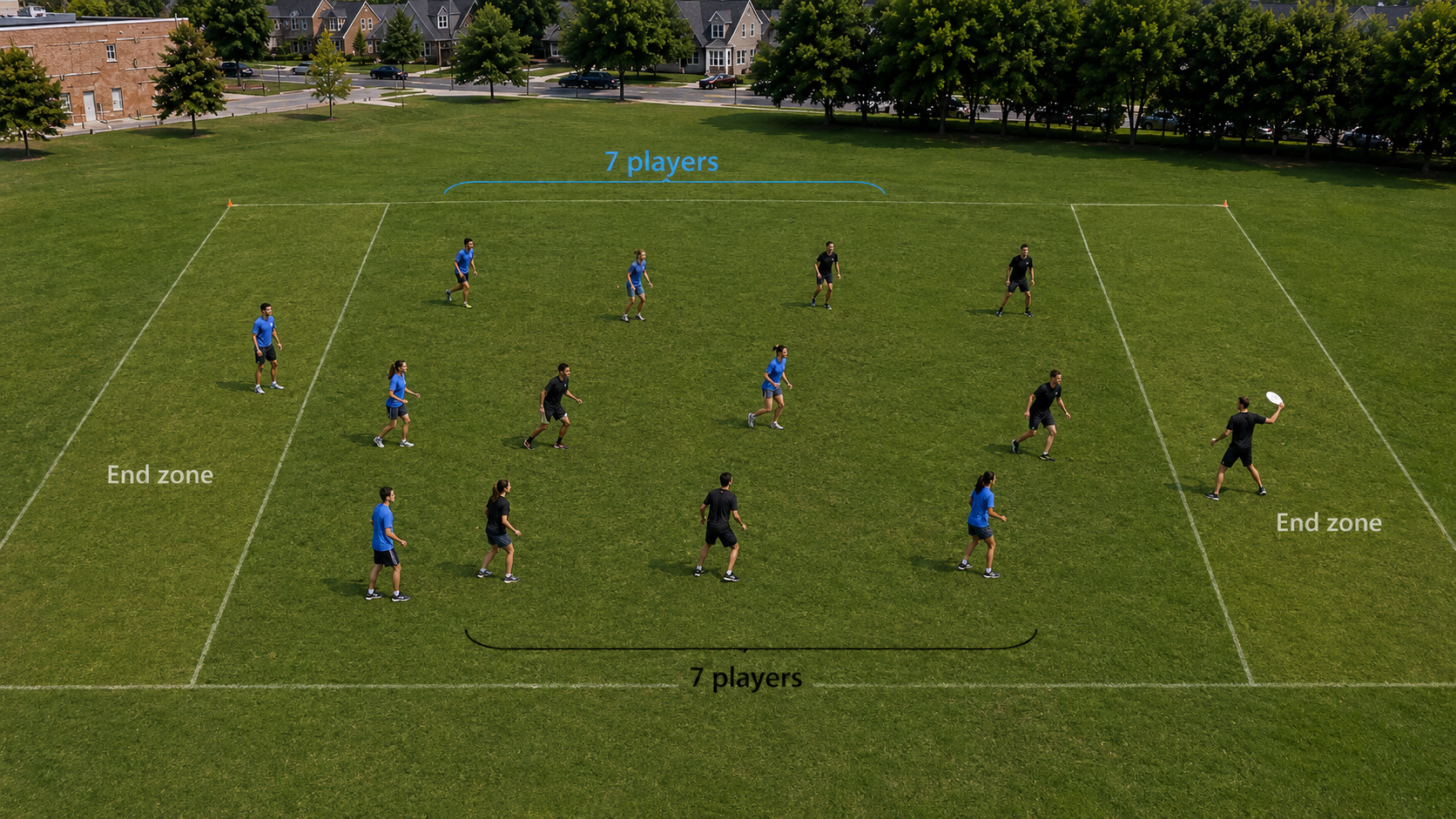
Once a player catches the disc, they cannot keep running with it. They stop, establish a pivot and look for a teammate. A dropped pass, interception, throw out of bounds or completed stall count turns possession over.
Games are played to 15 points, although Burlington’s recreational games also operate within a scheduled time window.
How does a team go 0–24?
One of their roughest games ended 15–2. There have been other nights when the score became so lopsided that the game was finished within roughly 30 to 45 minutes.
But simply describing Toss Bosses as a bad ultimate team misses much of the story.
Burlington Ultimate Club is a recreational league, but that doesn’t mean every player arrives with the same level of experience. Some people around the league have played university ultimate or have been throwing for years.
Toss Bosses, by comparison, have had plenty of players still learning the game.
Some players returned from last year’s Panic at the Disco roster. Others joined this season knowing almost nothing about ultimate and were learning the sport as the summer went along.
Attendance also makes it hard to win. Ultimate is played seven-on-seven, and in Burlington’s mixed format, three women need to be on the field. There have been Toss Bosses games when only three women showed up, meaning those players had no substitutes and could end up playing virtually every point.
By the final game, something had changed
The final regular-season game began in a familiar way. Toss Bosses fell behind roughly 11–1, and another lopsided loss appeared to be underway.
Then, for one stretch, the team began playing some of its best ultimate of the season.
Players were moving before the disc arrived instead of standing and waiting for it. Cuts opened space. Throws connected. The disc began moving down the field with a speed and rhythm that had often been missing earlier in the summer.
Toss Bosses scored roughly six more points and finished with seven, matching their season high.
They still lost, but the difference between the team that started the summer and the one finishing it had become increasingly obvious.
So why do they keep coming back?
At one game this season, Toss Bosses were down by 10 points. Music was playing on the sideline. Players were dancing between points. The game was going terribly, but the mood didn’t seem to follow the score.
They still want to win, of course. After 24 straight regular-season losses, a first victory might produce a celebration wildly disproportionate to a Burlington recreational ultimate game.
One coach told Burlington News that a player who couldn’t throw a flick in May spent hours all summer learning it. In the final regular-season game, that player launched one the length of the field.
If the group comes back in 2027, perhaps the third name will finally get them their first win.
Sources
- Burlington Ultimate Club regular-season standings and schedules
- Burlington Ultimate Club recreational rules, including mixed seven-on-seven play
- Burlington News reporting, including information from a Toss Bosses coach