
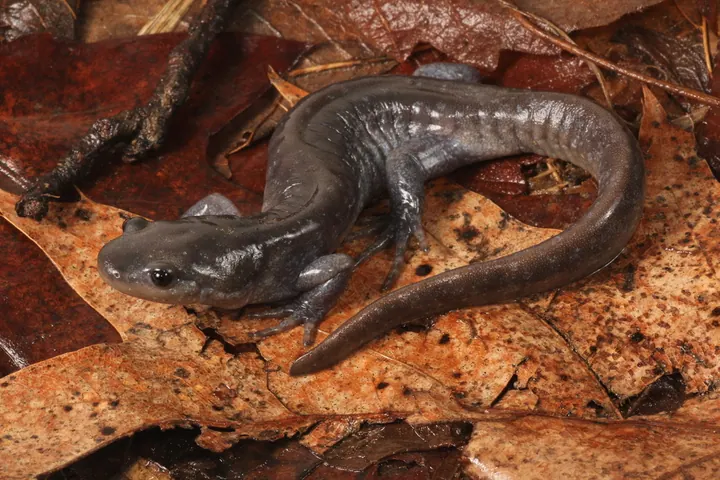
For part of every spring, a stretch of King Road stops behaving like a road. Cars are kept out so a small, dark amphibian can cross it.
The Jefferson salamander spends most of its life underground in forested habitat. When the right combination of thaw, rain and temperature arrives, adults move toward temporary breeding ponds. Much of that movement happens at night. Where a road cuts across the route, the trip can become deadly.
Burlington’s closure is unusual because it treats the migration itself as infrastructure. The road is not blocked because construction has begun or because flooding has made it unsafe. It is blocked because the animals’ safe passage lasts only a short time and cannot be moved to a more convenient week.
A population hidden below the surface
Jefferson salamanders are endangered in Ontario. Habitat loss and fragmentation are central threats: the animals require both forest and suitable ponds, with a safe route between them. A breeding pond on one side of a road and forest on the other can look intact on a map while functioning as a trap on the ground.
The closure protects a journey, not simply a place.
That distinction is what makes the Burlington example so visual. Conservation is often described as protecting a park or preserving a wetland. Here, protection means temporarily changing how people move so another species can move at all.
The timing changes with conditions, so residents should rely on the City’s current closure notice rather than an old date. The animals should not be handled, followed off trail or disturbed for photographs.